The six common types of flooring are solid wood, engineered wood, laminate, vinyl, tiles and marble. They differ most in cost, how they handle water and how much upkeep they need. This guide gives you one neutral comparison table with dated Indian prices, then a section on each type and a room-by-room table, so you can pick floors for each room of a home or project without wading through product pitches.
TL;DR
- Vitrified tiles are India's all-rounder: water-resistant, hard-wearing and about ₹100 to ₹170 per sq ft installed.
- Wood, solid or engineered, is the warmest and the dearest, at ₹380 to ₹820+ per sq ft installed, and belongs in dry rooms.
- Laminate looks like wood at about half the price but its fibreboard core swells if water stands on it.
- SPC vinyl is waterproof and clicks together, which makes it the easy wood-look option for kitchens and offices.
- Marble needs polishing every 3 to 4 years; granite is tougher but gets slippery when wet and polished.
- In Gulf homes, porcelain tiles, marble and SPC handle heat, sand and constant AC better than solid wood.
6 Types of Flooring Compared
- Solid woodPlanks cut from one piece of timber
- Engineered woodReal wood veneer on a plywood core
- LaminatePhoto of wood on a fibreboard core
- VinylPVC sheet, tile or rigid SPC plank
- TilesVitrified and ceramic
- MarbleNatural stone, plus granite
Prices below come from two dated Indian sources. HouseYog's figures are installed (material plus labour); JK Cement's are material only, so they run lower. Neither includes skirting, wastage or adhesive.
| Type | Cost per sq ft (India) | Life / durability | Water resistance | Maintenance | Best rooms |
|---|---|---|---|---|---|
| Solid wood | ₹380–820+ installedJK Cement: not listed | High; can be resanded many times | Low | Polish; sand and refinish when worn | Bedrooms, living rooms |
| Engineered wood | ₹380–820+ installedJK Cement: ₹200–450 material | High; resanding limited by veneer | Low | As solid wood, fewer sandings | Bedrooms, AC living rooms |
| Laminate | ₹160–300 installedJK Cement: not listed | Medium; set by AC rating | Splashes only | Dry mop; replace damaged planks | Bedrooms, study, offices |
| Vinyl (SPC) | ₹70–160 installed (all vinyl)JK Cement: SPC ₹100–250 material | Medium; SPC 15–20 years | High | Sweep and mop; replace planks | Kitchens, offices, rentals |
| Tiles | Vitrified ₹100–170, ceramic ₹65–110 installedJK Cement: ₹80–150 / ₹40–90 material | Vitrified high; ceramic medium | Very high | Mop; clean grout lines | Every room; wet areas |
| Marble | Indian ₹120–230, imported ₹280–600+ installedJK Cement: ₹200–500+ material | High to very high | Medium; stains | Seal; polish every 3–4 years | Living, dining, lobbies |
Installed prices: HouseYog, updated 18 April 2026 (solid and engineered wood share one range there). Material prices: JK Cement, 3 March 2026. Durability ratings are HouseYog's; the only lifespan in years (SPC 15 to 20 years) is JK Cement's. Marble polishing costs ₹25–40 per sq ft each time (HouseYog). Vitrified tile water absorption is 0.5% or less under ISO 13006.
Plan Floor Finishes in a BIM Model
Augmintech's BIM Architecture program teaches building information modelling for architecture, where floor types, finish schedules and quantities come out of the same model as the drawings. See the course page for the current syllabus, schedule and fees.
Wooden Flooring
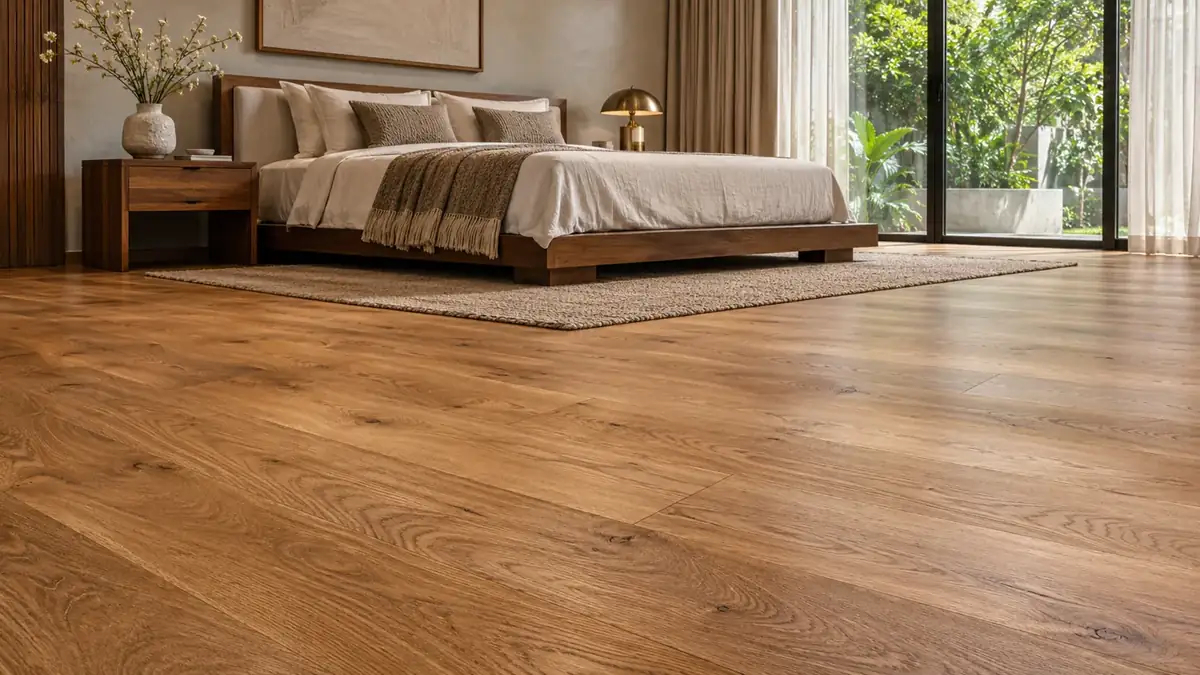
Interior and product images are AI-generated illustrations. Click any image to enlarge.
Wooden flooring comes in two forms, and the difference matters more than the species.
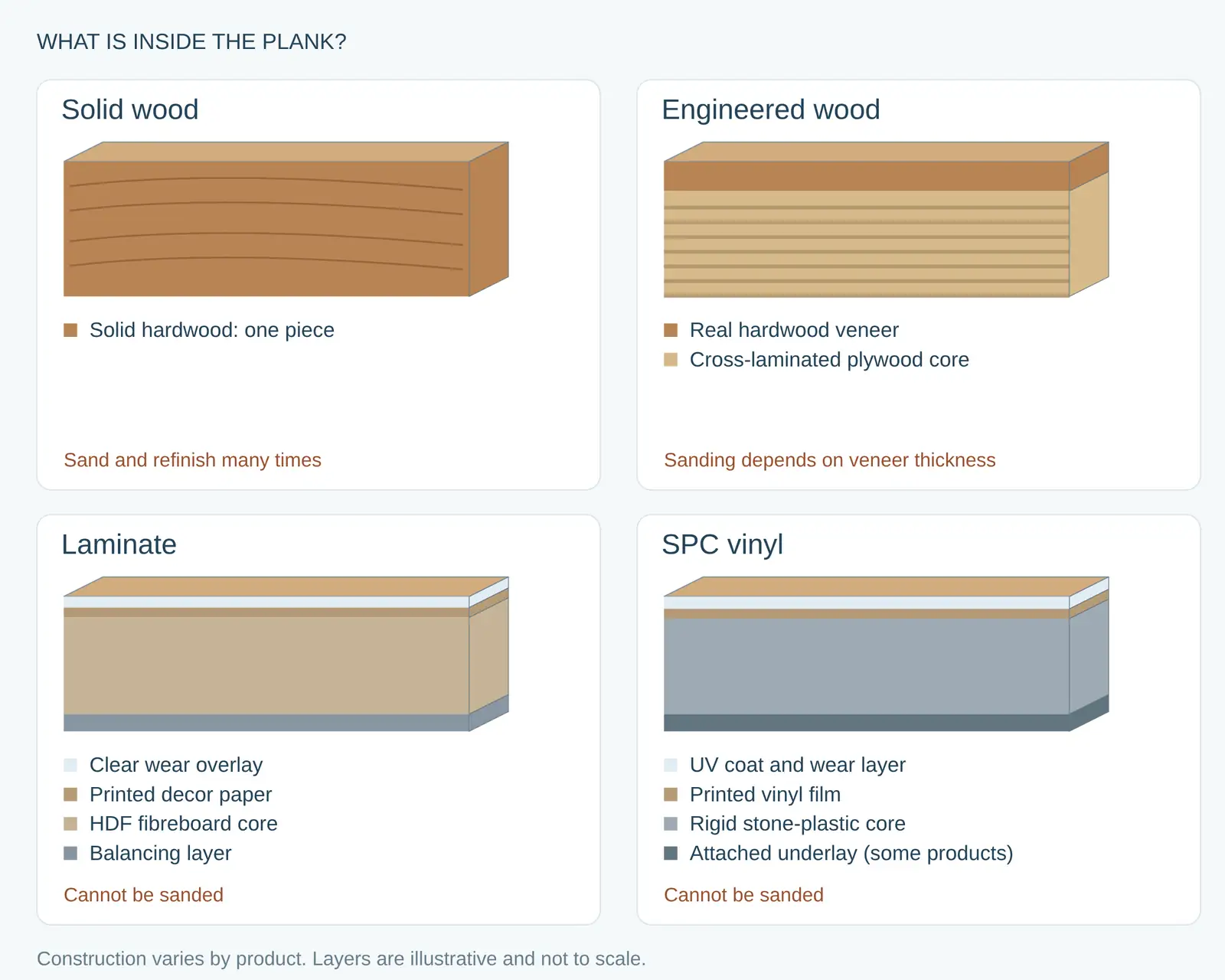
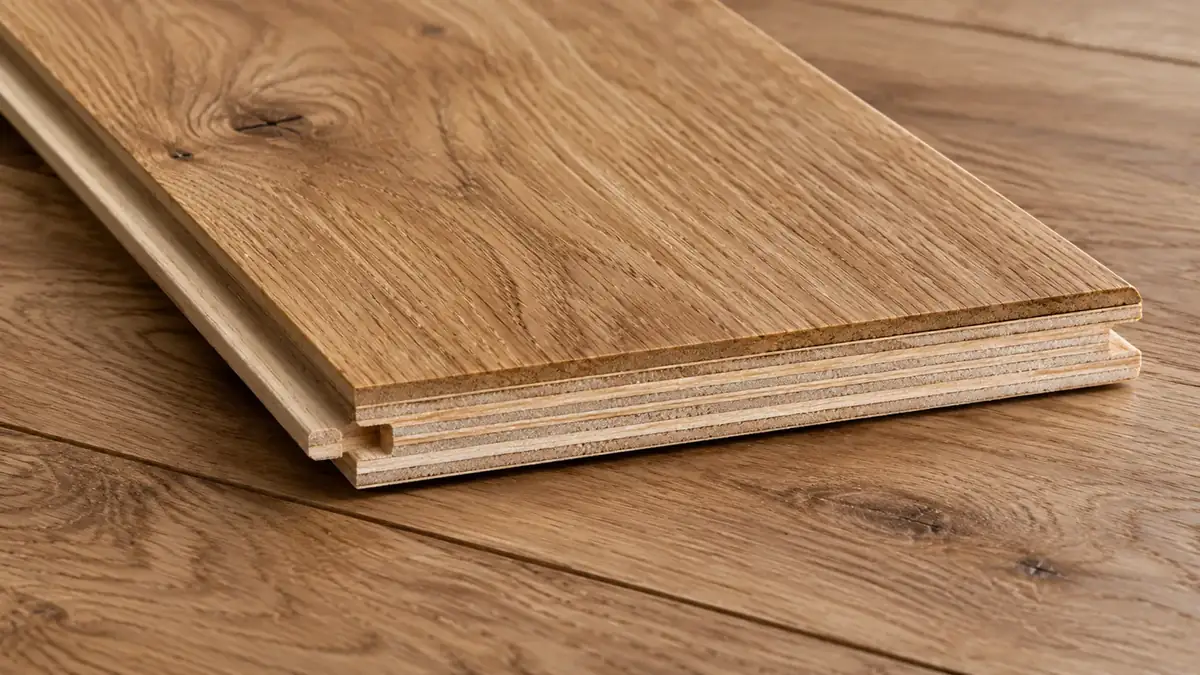
Solid wood is a plank cut from a single piece of timber. Because it is wood all the way through, it can be sanded and refinished many times over its life. Engineered wood has a thin top layer of real hardwood, the veneer or wear layer, glued onto a cross-laminated plywood core. From above, the two look identical. The layered core moves less than a solid plank as humidity changes, which is why engineered boards are preferred over underfloor heating.
How often you can resand an engineered floor depends on the veneer. The Wooden Floor Store estimates that each sanding removes about 1 mm:
Specs are written as total/veneer thickness: 15/4 means a 4 mm veneer on a 15 mm board.
- Warm, quiet and real wood underfoot
- Can be refinished (solid: many times)
- Adds resale appeal
- The priciest floor here, alongside imported marble
- Swells, cups or stains with water
- Scratches from grit and pet claws
Why bedrooms, not bathrooms: bedrooms are dry, often air-conditioned and see light foot traffic, which is where wood lasts. Bathrooms and kitchens bring standing water and steam. JK Cement notes that engineered wood swells with moisture unless it is laid over a vapour barrier, and recommends it only for dry, air-conditioned rooms.
Vinyl Flooring
Vinyl flooring is made from PVC with a printed design and a clear wear layer on top. It comes in three formats.
Sheet vinyl
Wide rolls glued to the subfloor with few seams. Cheapest, and common in clinics, labs and budget rooms.
LVT / LVP
Luxury vinyl tiles and planks, thin and flexible, usually glued down. Wood and stone looks.
SPC
Stone-plastic composite core makes a rigid plank that clicks together over a flat floor. Marketed as waterproof.
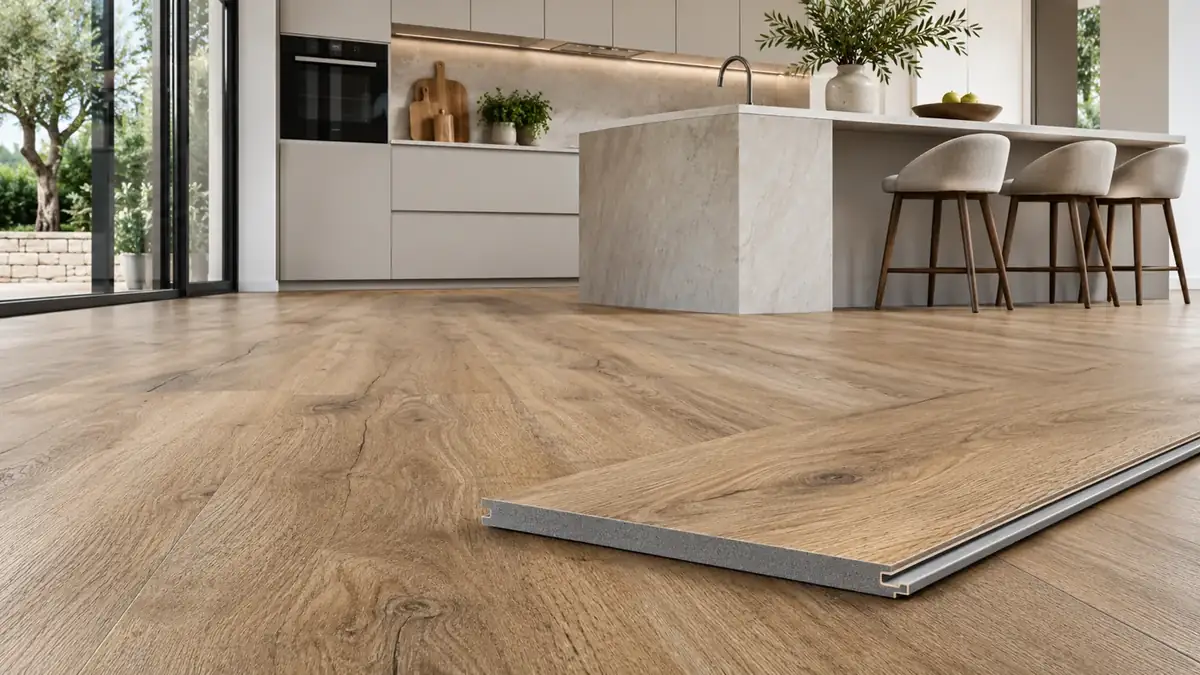
The wear layer is the clear top film that takes the scuffs, and its thickness tells you where a vinyl floor can go. Alpine Floor's guide (June 2026) breaks it down like this:
Vinyl's weak points are that it cannot be sanded or refinished, cheaper products can dent under heavy furniture, and quality varies widely between brands, so check the datasheet for the wear layer and core type before buying.
Laminate Flooring
Laminate flooring is a photograph of wood or stone sealed under a hard, clear overlay and bonded to a high-density fibreboard (HDF) core, with a balancing layer underneath (see the diagram above). The planks click together and float over an underlay.
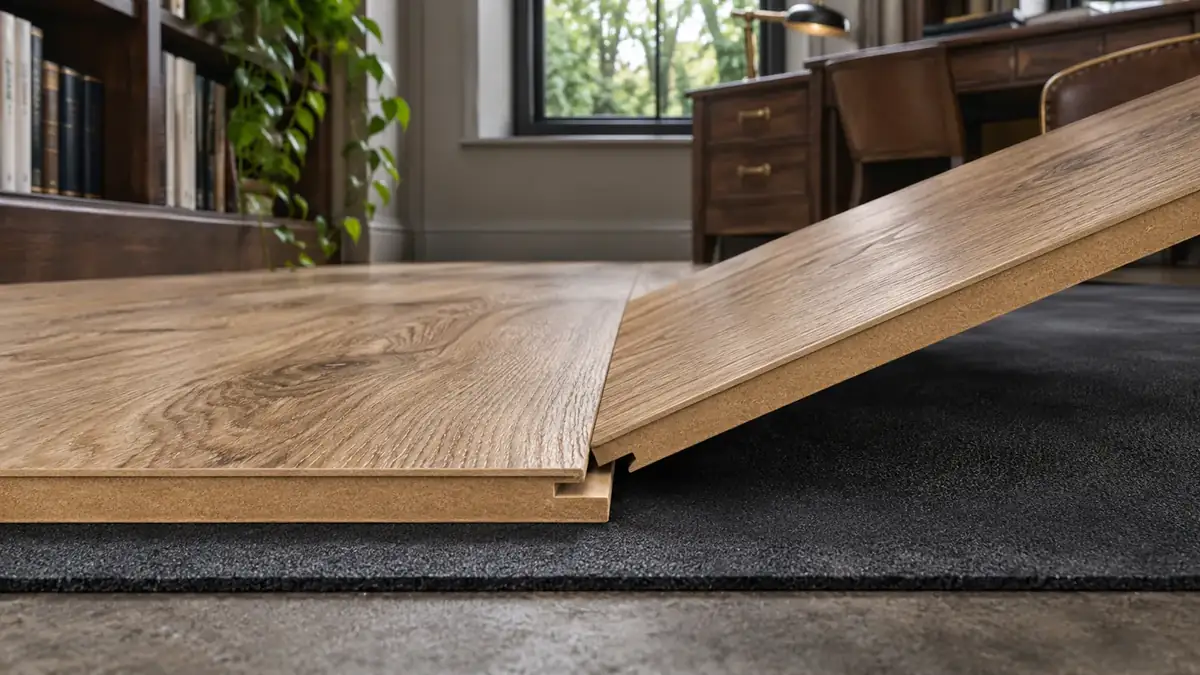
Laminate is graded by an AC (abrasion class) rating from the Association of European Producers of Laminate Flooring. The higher the number, the more traffic it takes:
Ratings and use classes as summarised by Bricoflor. In the class number, 2 means residential and 3 commercial; the second digit runs from light (1) to heavy (3).
Laminate vs vinyl
Both are wood-look click planks, so this is the most common shortlist. The deciding question is water.
Choose laminate for dry rooms where you want a firm, wood-like board with a high AC rating. Choose SPC anywhere water is likely.
Tiles and Marble
Tiles and stone are still India's most common floors, because they shrug off water, heat and heavy cleaning.
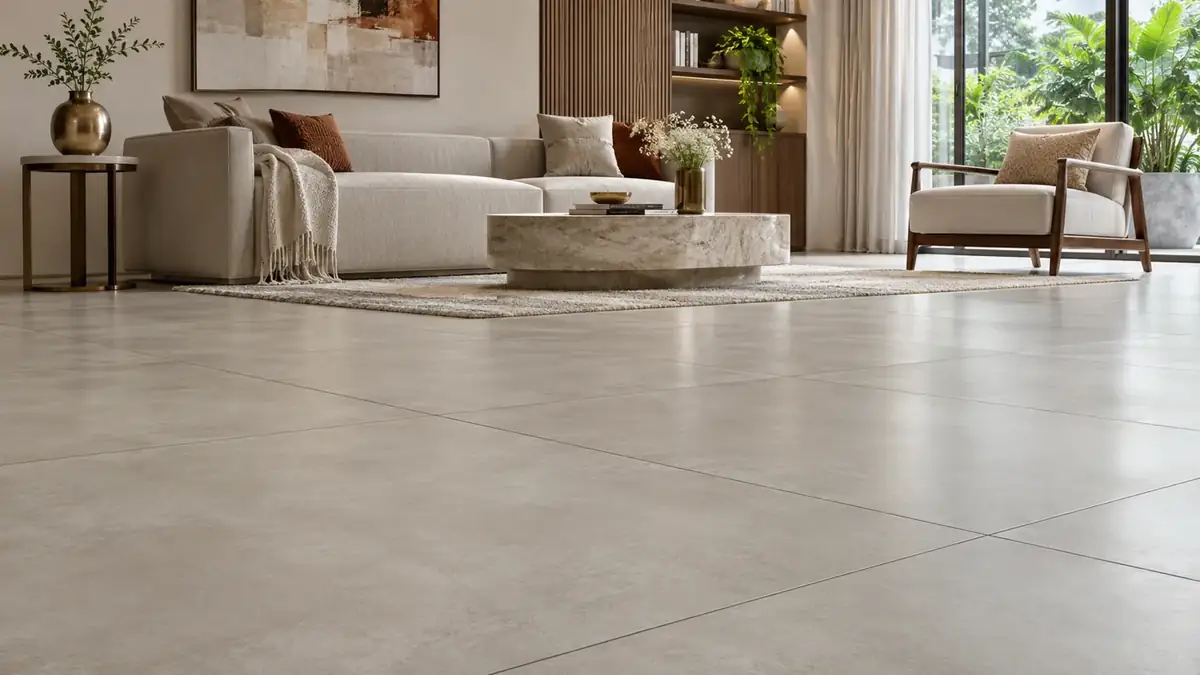
Vitrified tiles
Fired until glass-like, absorbing 0.5% water or less. Hard, stain-resistant and suitable for every room; choose matt or anti-skid in wet areas.
₹100–170 installed (HouseYog)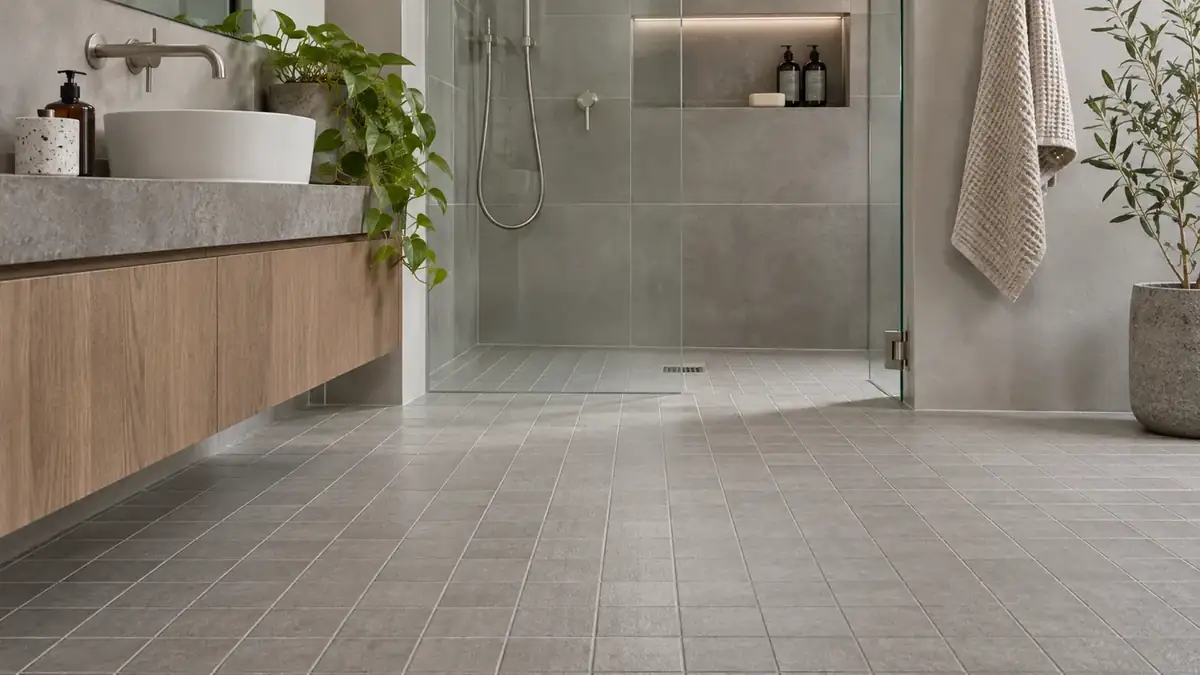
Ceramic tiles
Cheaper and more porous than vitrified, so better for walls, bathrooms and light-traffic floors than for busy halls.
₹65–110 installed (HouseYog)
Marble
Natural stone with unique veining. Indian marble such as Makrana costs far less than imported Italian or Turkish stone. It is porous, so seal it, and wipe spills such as lemon juice quickly.
₹120–230 Indian, ₹280–600+ imported, installed (HouseYog)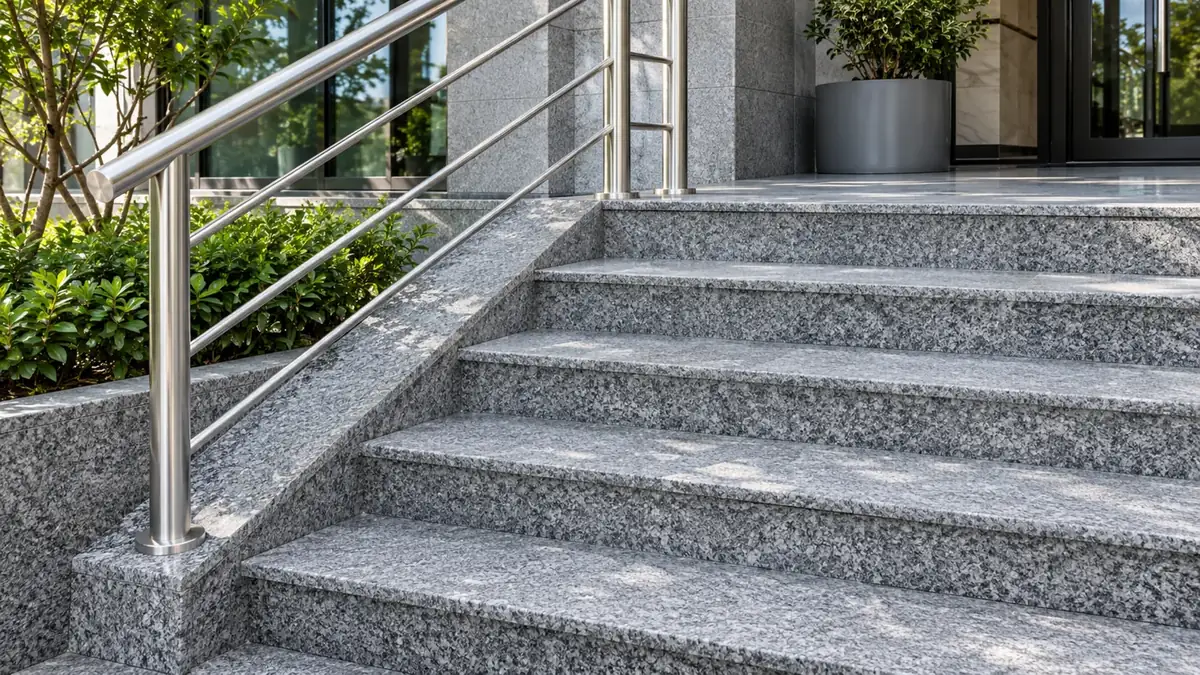
Granite
Harder than marble and rated very high for durability. Used on stairs, entrances and balconies; a highly polished finish gets slippery when wet.
₹130–350 installed (HouseYog)Which Floor for Which Room
| Room | Recommended | Why | Avoid |
|---|---|---|---|
| Living room | Vitrified tiles, marble, or engineered wood if air-conditioned | Heavy traffic and a large visible area | Ceramic in busy halls |
| Bedroom | Engineered wood, laminate (AC3+), solid wood | Dry, quiet and warmer underfoot | Polished stone if you want warmth |
| Kitchen | Matt vitrified tiles or SPC vinyl | Water, oil spills and frequent mopping | Solid wood, laminate |
| Bathroom | Anti-skid vitrified or ceramic tiles | Constant water; floor must drain | Wood, laminate |
| Balcony | Outdoor-rated vitrified tiles or flamed granite | Sun, rain and grip when wet | Wood, laminate, indoor vinyl |
| Office | SPC or LVT with 0.5 mm wear layer, or AC4 laminate | Rolling chairs and steady foot traffic | AC1–AC2 laminate |
Flooring for Gulf Homes
UAE and Saudi homes put floors through conditions Indian homes rarely face at the same time: outdoor summer temperatures that regularly exceed 45°C, fine sand tracked indoors, and air conditioning that runs most of the year. Dubai flooring contractor Floorworld (July 2026) points to the constant swing between outdoor heat and air-conditioned interiors as the reason to match the material to the climate.
In practice that points to porcelain tiles or marble for living areas and wet rooms, with SPC vinyl as the wood-look choice. Solid wood is best kept to well-sealed, air-conditioned bedrooms, if used at all.
Frequently Asked Questions
Sources
- HouseYog, Flooring cost in India per sq ft (updated 18 April 2026).
- JK Cement, Flooring guide: types, materials and best flooring (3 March 2026).
- The Wooden Floor Store, Why veneer thickness matters.
- Alpine Floor, SPC flooring wear layer guide (24 June 2026).
- Bricoflor, Laminate AC ratings; Designing Buildings, Laminate flooring; Kronotex India, Guide to laminate flooring.
- Vitrified tile, water absorption under ISO 13006.
- Floorworld (Dubai), Best flooring for UAE homes (14 July 2026); Tilesman, Porcelain tiles in UAE heat.
This article was last reviewed on 7 November 2026. Prices change often; confirm with local dealers before budgeting.
