Valves are classified by function into four groups: isolation (on/off), regulation (throttling), non-return (check) and safety (pressure relief). This guide covers 12 valve types across those groups, with a P&ID symbol for each, and shows which valve to pick for which service.
Most valve guides stop at a list of names. When you read a P&ID, fill in a valve datasheet or check a line class, the real question is different: which valve does this service need, and why? This guide answers that, starting with what each valve does.
TL;DR
- Valves are grouped by function: isolation, regulation, non-return and safety.
- Isolation valves (gate, ball, plug, butterfly, knife gate) are meant to be fully open or fully closed.
- Regulation valves (globe, needle, diaphragm, pinch, control) are designed to work partly open.
- Gate valves must not be used for throttling: a partly open gate erodes its seats.
- Check valves stop backflow; swing, lift, dual-plate and ball checks suit different lines.
- Safety and relief valves protect equipment from overpressure and open at a set pressure.
- ASME B16.34 and API valve standards govern ratings and design; Gulf hydrocarbon projects add fire-safe and sour-service rules.
What Is a Valve in Piping?
A valve is a mechanical device that starts, stops, regulates or directs the flow of a fluid in a pipe, or relieves excess pressure. It does this by moving a closure element (a disc, gate, ball, plug or diaphragm) into or out of the flow path.
Types of Valves by Function
This guide covers 12 valve types. Each one belongs to a function group, which tells you how it is meant to be used.
Isolation (On/Off) Valves
Isolation valves shut off a line for maintenance, separate equipment or route flow. They are designed to sit fully open, with the smallest possible obstruction, or fully closed, with a tight seal. Running them partly open causes high-velocity flow across the seats, which leads to wear and leakage.
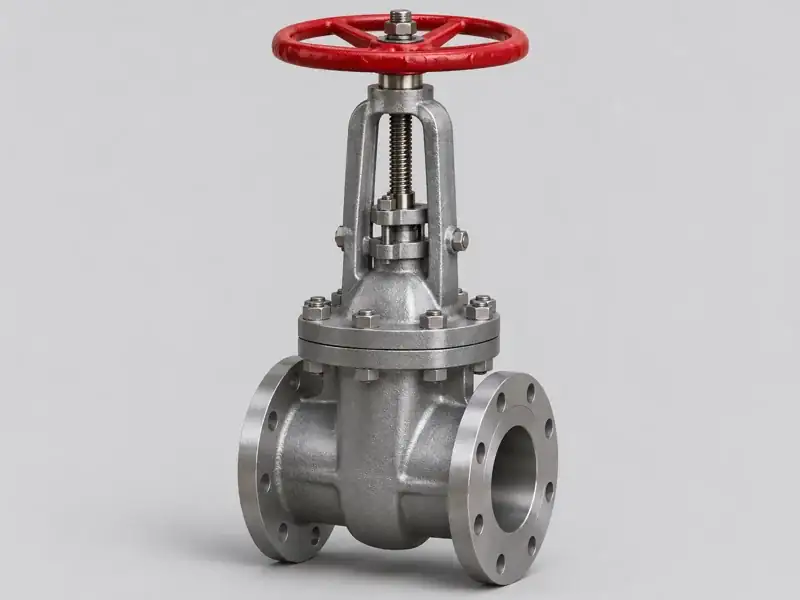
Gate valve linear, multi-turn
A wedge or gate slides across the flow. Fully open, it gives a straight-through bore and very low pressure drop. It is a general service valve "used primarily for on-off, non-throttling service" (VMA).
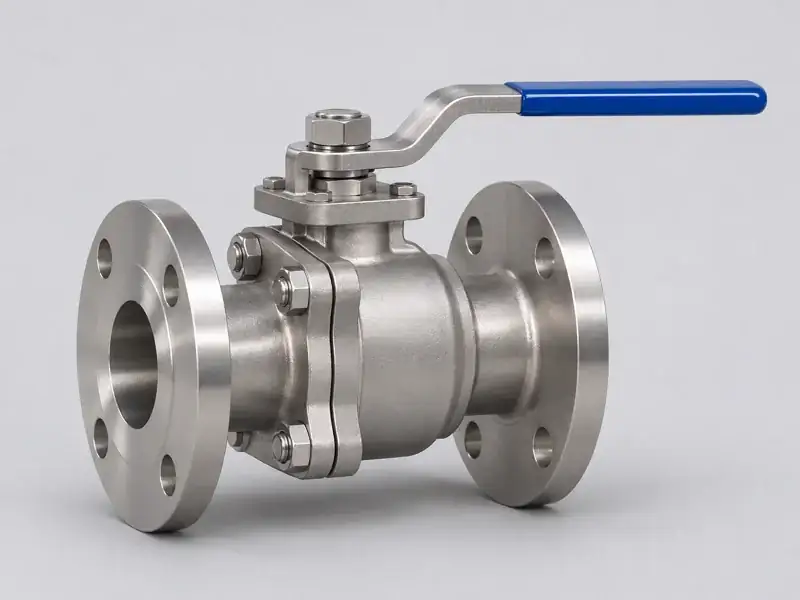
Ball valve quarter-turn
A ball with a bore rotates 90° to open or close. It is quick to operate and seals tightly, and is widely used for isolation on oil, gas and water lines. VMA notes it is used for both on-off and throttling services.
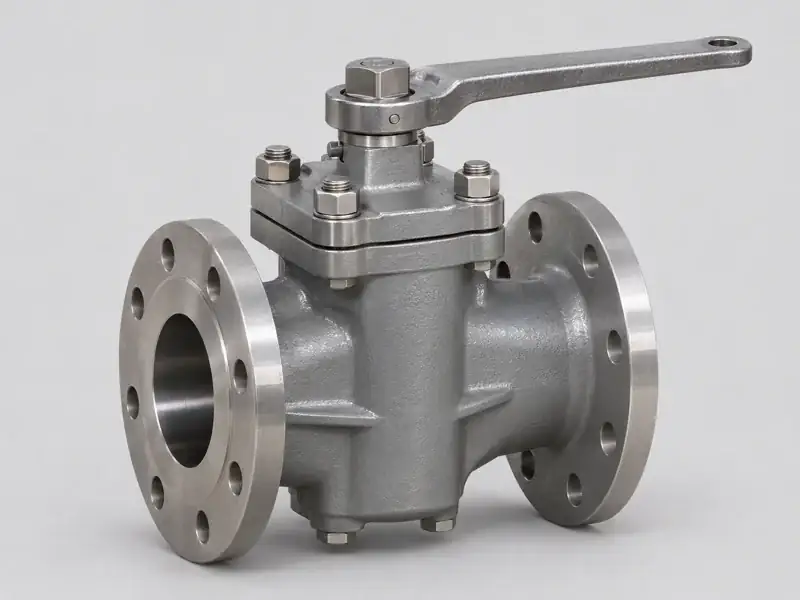
Plug valve quarter-turn
A cylindrical or tapered plug with a port rotates to open or close. It is "used primarily for on-off service and some throttling services" (VMA), and multi-port plugs can divert flow.
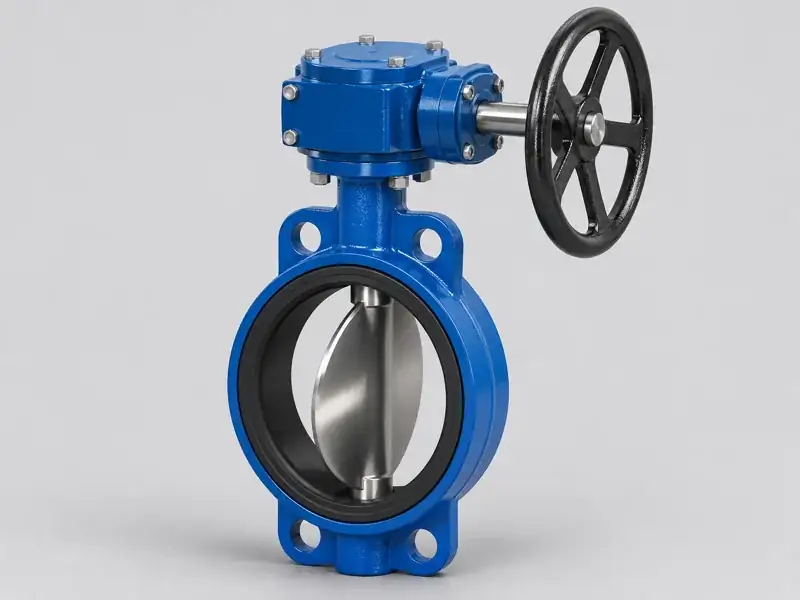
Butterfly valve quarter-turn
A disc on a shaft turns across the flow. It is light and short, so it suits large water lines, cooling water and HVAC chilled water. It can also throttle.
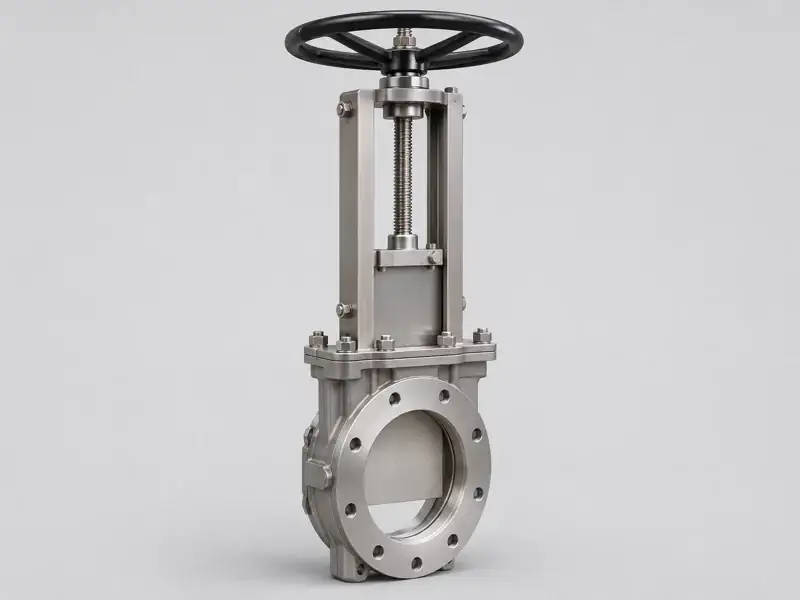
Knife gate valve linear
A thin, sharp-edged blade cuts through thick media. It is used on slurry, pulp and solids-laden lines at moderate pressure (around Class 150) and throttles poorly (Project Materials).
Regulation (Throttling) Valves
Regulation valves are built to work partly open. Their flow path and trim let them control flow steadily without damaging the seat.
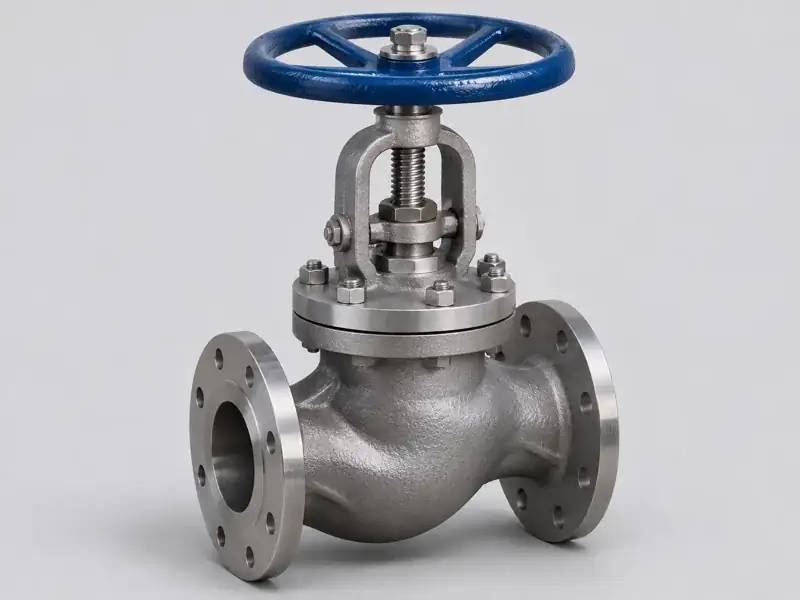
Globe valve linear
A disc moves onto a seat across an S-shaped flow path. Pressure drop is higher than a gate valve, but throttling is excellent. It is common on steam bypasses, cooling water and dosing lines.
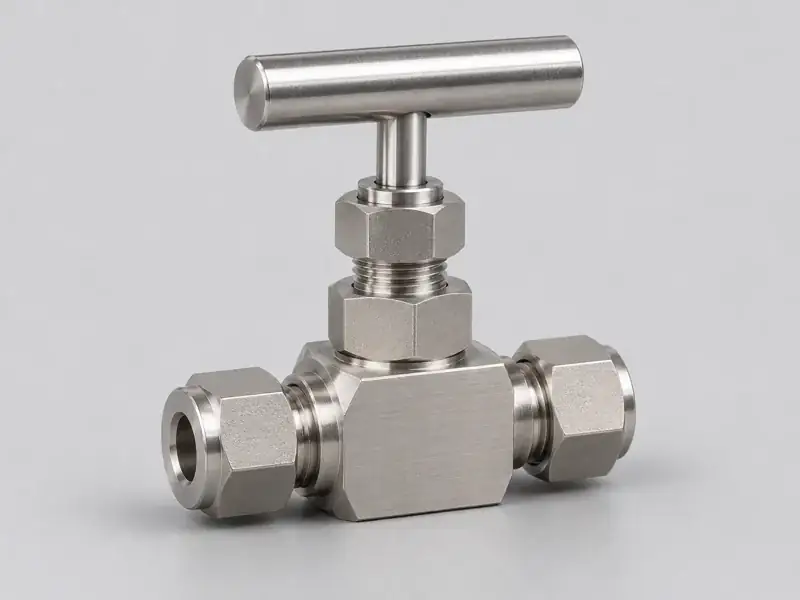
Needle valve linear, fine thread
A tapered needle gives precise control in small lines. It is "a volume-control valve that restricts flow in small lines" (VMA), typical on instrument and sampling connections.
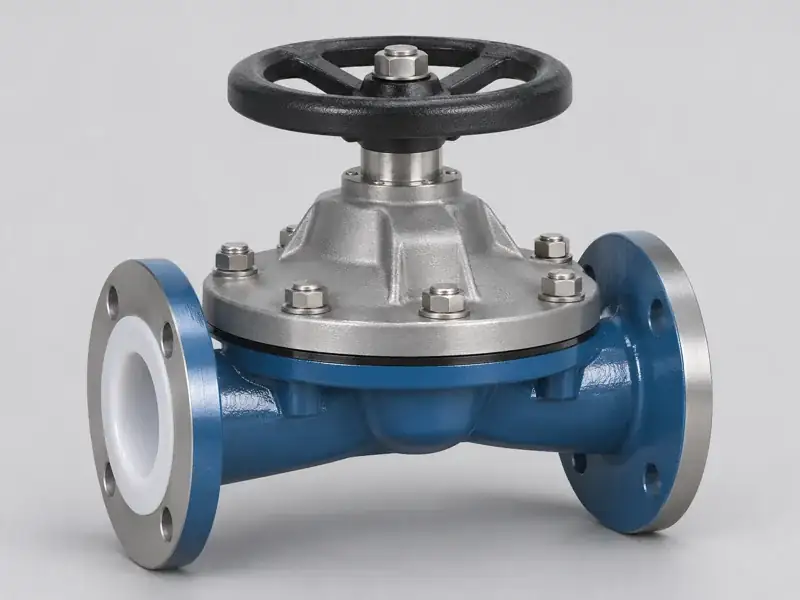
Diaphragm valve linear
A flexible diaphragm presses onto a weir or seat. The diaphragm isolates the fluid from the stem, so it "handles corrosive, erosive and dirty services" (VMA).
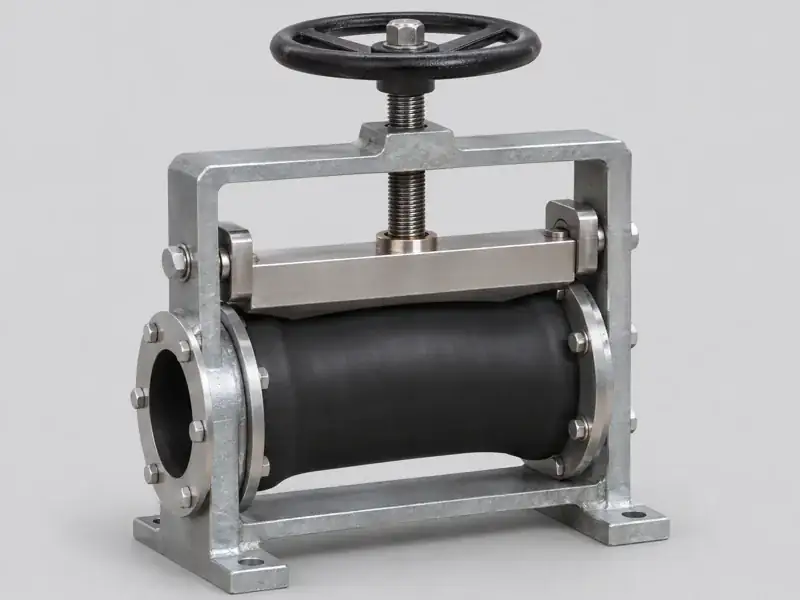
Pinch valve linear
A rubber sleeve is squeezed shut. The sleeve is the only wetted part, so it suits abrasive slurries and mining lines, typically to about 10 bar (Project Materials).
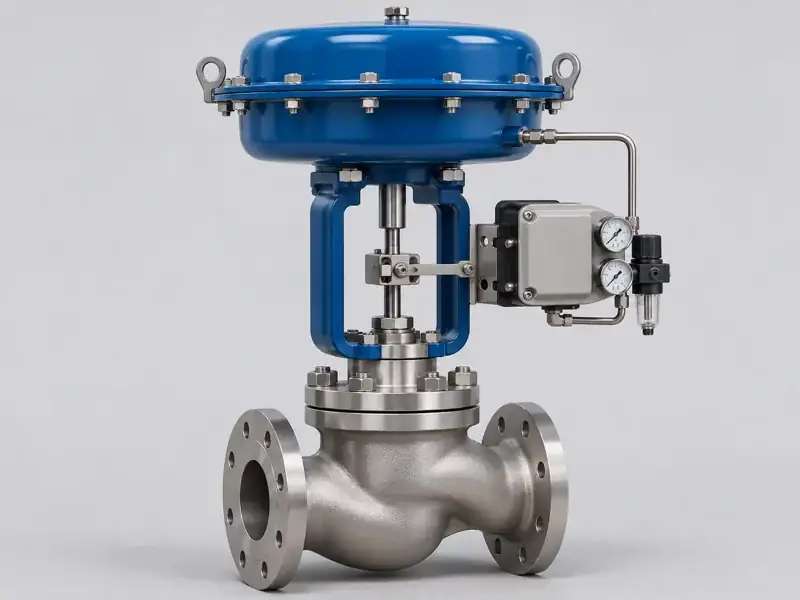
Control valve actuated
A globe, ball or butterfly valve with an actuator and positioner, driven by a controller signal. It is "designed to ensure accurate proportioning control of flow" (VMA).
Non-Return (Check) Valves
A check valve lets fluid flow one way and closes automatically when flow reverses. No operator is needed. The most common location is the pump discharge, where it should sit as close to the pump as practical to limit surge when the pump trips (Project Materials).
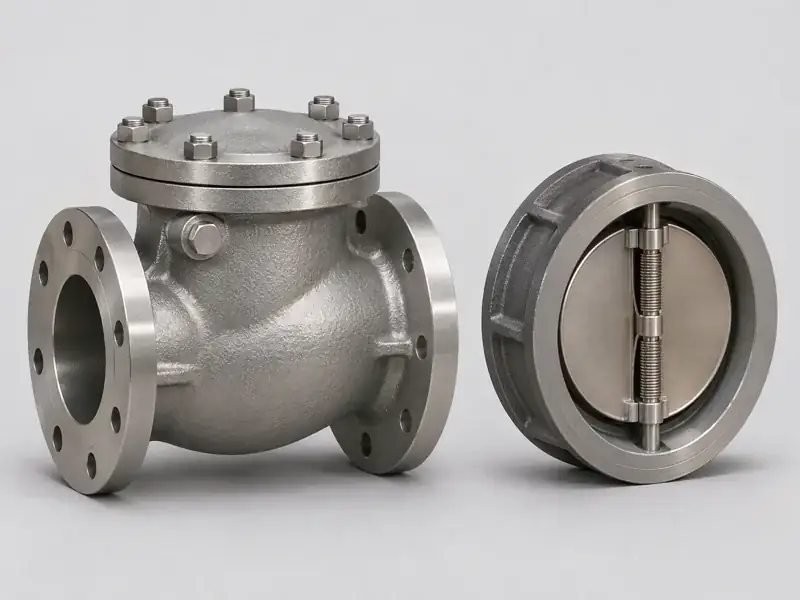
Check valve self-acting
Swing check: the default for horizontal lines of NPS 2 and above; it does not work in vertical-up lines and is the most prone to slam. Lift (piston) check: small-bore, high-pressure steam and gas lines; horizontal or vertical up. Dual-plate check: short wafer body with spring-loaded plates; fast closing, works in any orientation, and about a quarter of the weight of a 10-inch swing check. Ball check: viscous fluids, slurries and wastewater (Project Materials).
Safety and Pressure Relief Valves
These valves open automatically when pressure reaches a set pressure, then close once pressure falls. The set pressure is at or below the protected vessel's maximum allowable working pressure (MAWP). The terms are often mixed up (Project Materials):
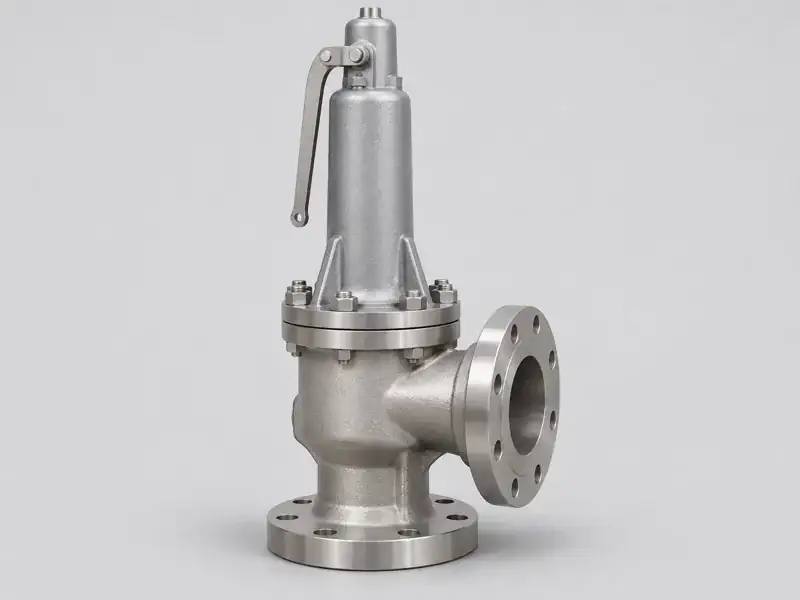
Safety relief valve spring-loaded
Safety valve: lifts fully and rapidly ("pops") for gas, steam and vapour. Relief valve: opens gradually in proportion to overpressure, for liquids. Safety relief valve: works either way, depending on the fluid. On P&IDs all of these are usually tagged PSV. ASME Section VIII requires overpressure protection on pressure vessels, and API 520 and 526 cover sizing and dimensions.
Valve Symbols Used in P&IDs
Every valve on a P&ID is shown by a symbol, usually built on the "bow-tie" (two triangles) with a mark that identifies the type. The sheet below shows the symbols used in this guide.
Symbols follow common P&ID practice, but details vary between companies and standards (ISA-5.1, ISO 14617 and company legends). On a real project, always read the legend sheet first.
Gate Valve vs Globe Valve
| Point | Gate valve | Globe valve |
|---|---|---|
| Flow path | Straight through | S-shaped |
| Pressure drop (fully open) | Very low | High |
| Throttling | Poor: seats wire-draw and erode | Excellent: designed to work partly open |
| Sealing | Good (metal wedge) | Very good (disc on seat) |
| Typical size | 2 in to 60 in and above | ½ in to 24 in |
| Typical service | Line isolation, mainline block valves | Steam bypass, cooling water, dosing |
| Main standard (cast steel) | API 600 | API 623 |
Source: Project Materials, Globe vs Gate Valve.
- GateUse for isolation where low pressure drop matters, kept fully open or fully closed.
- GlobeUse where the valve has to throttle or regulate flow.
How to Select the Right Valve Type
Start with the service, then check the function needed. The table gives common choices; the project's piping material specification has the final say.
| Service | Isolation | Regulation | Non-return |
|---|---|---|---|
| Water (utility, cooling, fire) | Butterfly, gate, ball | Globe, butterfly | Dual-plate or swing check |
| Steam | Gate | Globe | Lift (piston) check |
| Hydrocarbon (oil, gas) | Ball (fire-tested), gate | Globe, control valve | Swing or dual-plate check |
| Slurry | Knife gate, pinch, ball | Pinch, diaphragm | Ball check |
| Corrosive (acids, alkalis) | Diaphragm, plug, ball, butterfly | Diaphragm, globe | Check in a compatible material |
Based on the Engineering ToolBox valve selection guide and the Project Materials check valve and fire-safe guides. Material compatibility decides the final choice for corrosive service.
Beyond the valve type, six factors complete the selection and appear on every valve datasheet:
Valve Standards: API and ASME
Editions change: at the time of writing, standards catalogues list ASME B16.34-2020 as the current edition, and API 600, 608, 609, 623 and 594 have all had new or revised editions since 2020. Check the edition your project specification calls up.
Valves in Gulf Oil and Gas Projects
Gulf oil and gas projects handle large volumes of flammable and often sour hydrocarbons. Two requirements show up again and again in their valve specifications.
Fire-safe valves. A fire-safe valve keeps a minimum level of sealing after a fire, usually through a secondary metal seat behind the soft seat. Operator specifications such as Saudi Aramco's SAES and ADNOC's require API 607 certification for quarter-turn valves in hydrocarbon service (Project Materials).
Sour service. Where the fluid contains H₂S, valve body, trim and bolting materials must resist sulphide stress cracking. For oil and gas production, the governing standard is NACE MR0175 / ISO 15156, which has replaced the old MR0175 with an identical text; refinery service falls under NACE MR0103 instead (TWI).
For a piping designer on a Gulf EPC project, this is daily work: choosing valve types from the piping material specification, reading them on P&IDs, placing them in the 3D model and checking valve datasheets for rating, material, fire-safe and NACE requirements.
Learn Valves, P&IDs and Line Classes
Augmintech's PG Program in Piping Design & Analysis covers valves, P&IDs and line classes across 150+ live hours over 6 months, with AutoCAD Plant 3D, SP3D, CAESAR II and AutoCAD P&ID, 3 industry projects and 500+ interview questions. ₹65,000 + GST in India, $850 abroad.
Frequently Asked Questions
Sources
- Valve Manufacturers Association (VMA), "Common Valve Types", vma.org.
- Project Materials: Globe vs Gate Valve; Check Valves; Safety Valve vs Relief Valve; Pinch Valve; Fire-Safe Valve; API 607 vs API 6FA.
- Engineering ToolBox, "Valve Selection Guide", engineeringtoolbox.com.
- ASME B16.34, Valves: Flanged, Threaded, and Welding End; edition history at GlobalSpec.
- API Standards 594, 600, 607, 608, 609, 623, 520 and 526 (American Petroleum Institute).
- TWI, "What has happened to the MR0175 standard ... and what is ISO 15156?", twi-global.com.
- Journal of Petroleum Technology, Abdelghani Henni, "Sour Gas Interest Grows in Middle East", 30 June 2013, jpt.spe.org.
This article was last reviewed on 4 November 2026.
