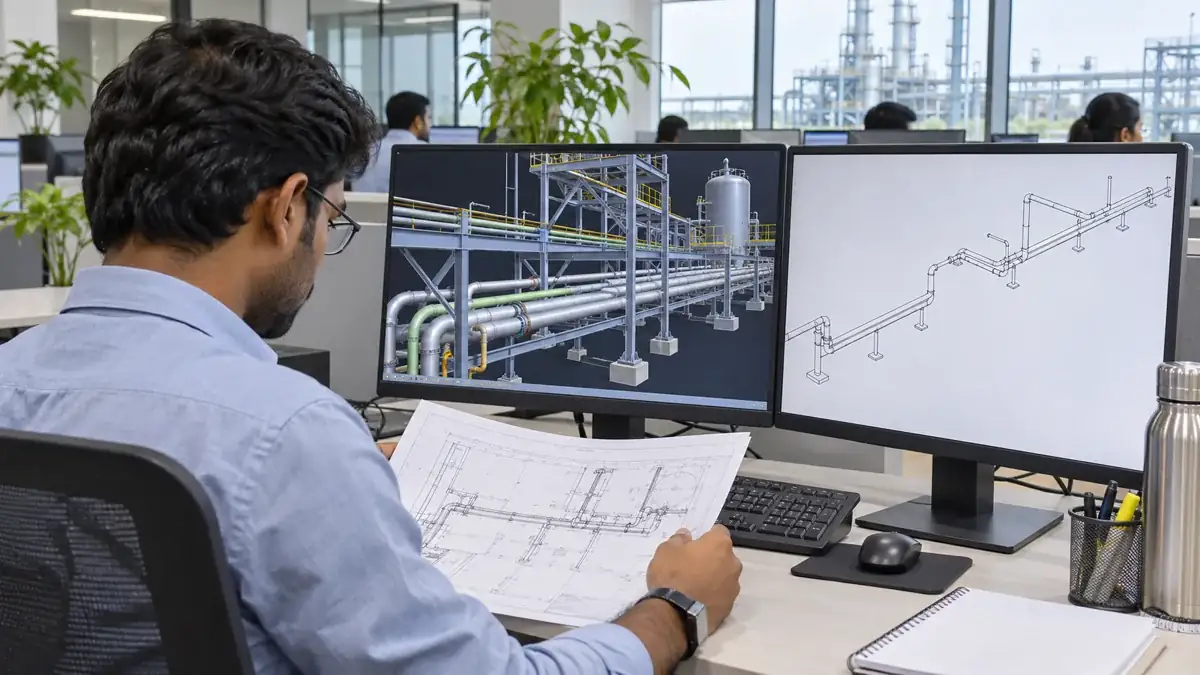
A piping engineer designs, routes and checks the pipes that carry fluids through an industrial plant, working for refineries, petrochemical and power plants, pharma units and the EPC firms that build them.
If you are a mechanical graduate, the two questions are simple: can I become a piping engineer, and what does it pay? This guide answers both with sourced salary data for India, the UAE and Saudi Arabia, and gives a five-step roadmap from fresher to Gulf-ready piping engineer.
TL;DR
- Piping engineers design and check plant piping: layouts, isometrics, line lists, material take-offs, supports and stress.
- The field splits into design, layout, stress and materials roles, and most people start in design.
- The core codes are ASME B31.3 for process piping and B31.1 for power piping.
- Software matters as much as theory: a 3D tool (Plant 3D, Smart 3D or E3D) and CAESAR II for stress.
- In India, AmbitionBox shows ₹1.8 to 6.8 lakh a year at 2 years, rising to ₹3 to 12 lakh at 5 years.
- Gulf portals show around AED 8,000 a month in the UAE and SAR 10,000 a month in Saudi Arabia across all experience levels.
- A portfolio of isometrics and a stress model is what gets a fresher shortlisted.
What Does a Piping Engineer Do?
A piping engineer turns the process design (the P&IDs) into a buildable, safe piping system. In practice, a normal week on an EPC project looks like this:
As the work grows, people specialise. The four common roles:
| Role | Main job | Typical outputs | Key tools |
|---|---|---|---|
| Piping design engineer | Routes and models piping to the spec | 3D model, isometrics, GA drawings, MTO | Plant 3D, Smart 3D, E3D |
| Piping layout engineer | Arranges equipment and pipe racks for access, safety and economy | Plot plans, equipment layouts, rack studies | 3D tools, layout standards |
| Piping stress engineer | Checks lines for thermal, weight, pressure and occasional loads | Stress reports, support loads, nozzle checks | CAESAR II |
| Piping materials engineer | Writes line classes and selects pipe, fittings, flanges and valves | Piping material specs, valve datasheets | Codes, ASTM/ASME standards |
Skills a Piping Engineer Needs
Codes Design codes
- ASME B31.3 (process piping): refineries, chemical, pharmaceutical and related plants
- ASME B31.1 (power piping): power plants
- Pipe, fitting and flange standards (B36.10M, B16.5, B16.9)
Drawings Documents
- Reading P&IDs and line lists
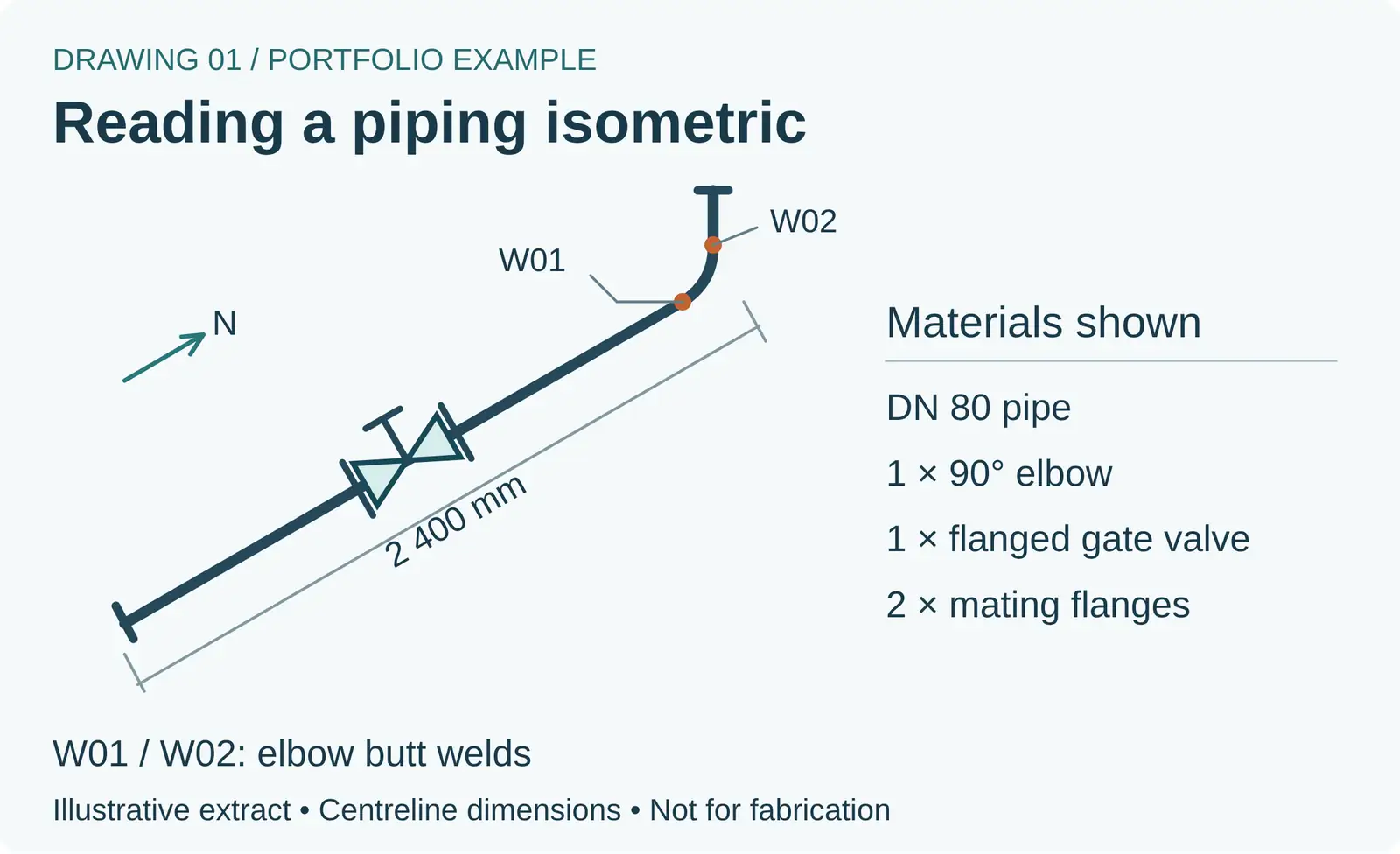
- Plot plans, GA drawings and isometrics
- Line classes and piping material specs
Components Hardware
- Valves, flanges, fittings and gaskets
- Pipe schedules and wall thickness
- Supports, hangers and spring supports
Analysis Stress basics
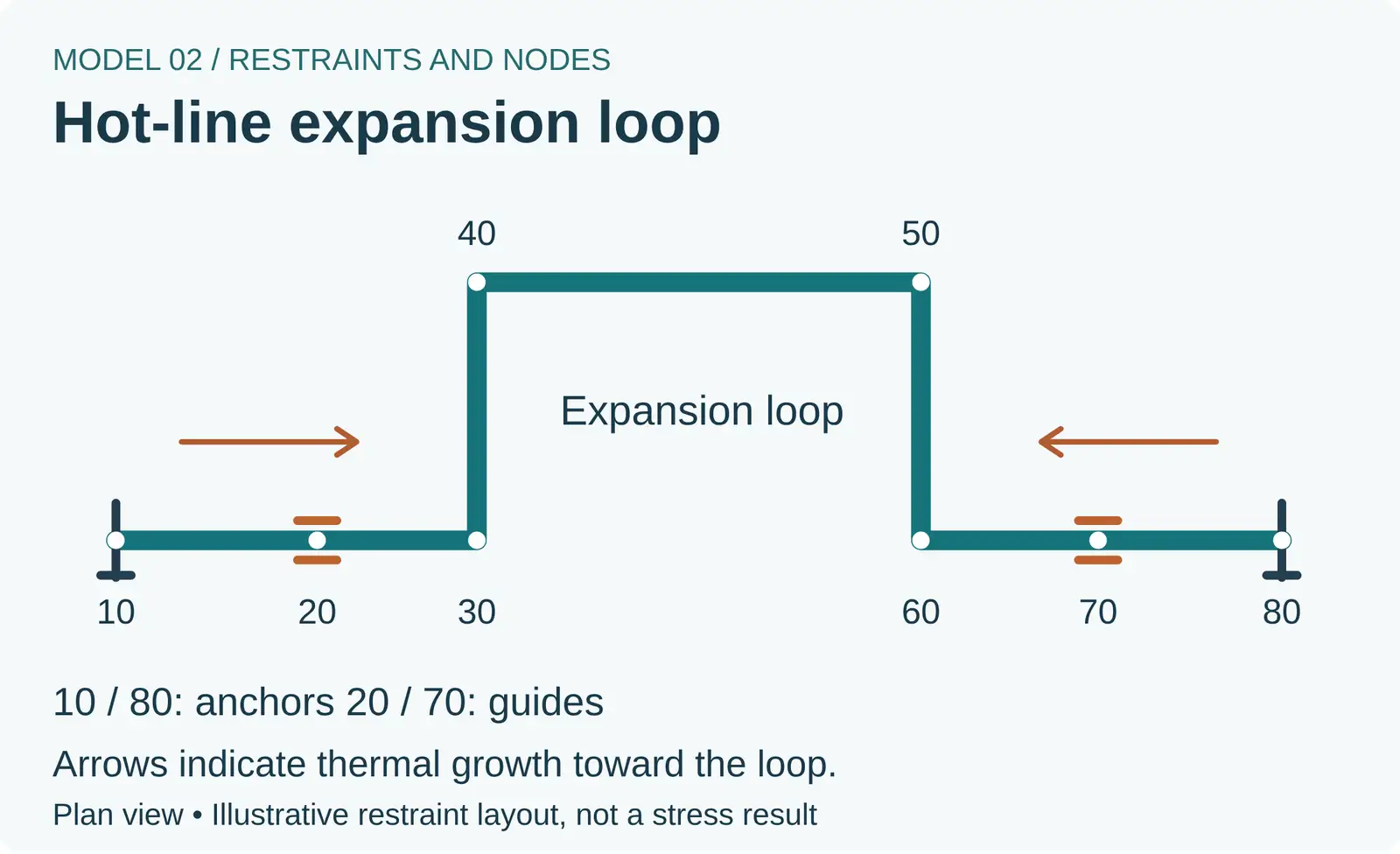
- Thermal expansion and flexibility
- Sustained, expansion and occasional load cases
- Nozzle loads on pumps and vessels
For the components side, start with our guides to the types of valves and the pipe schedule chart.
Piping software
Descriptions and usage from Project Materials, Software for Piping Engineering. Code scopes from GlobalSpec (ASME B31.3) and Material Welding (B31.1 vs B31.3).
Piping Engineer Salary in India vs UAE and Saudi Arabia
Every figure below comes from a named salary portal, with its date. Portals differ in how they collect data, so treat these as ranges, not offers. Where a portal does not give a band (for example, Gulf salaries by experience), we have left it out rather than estimate.
Two practical points. First, India and Gulf figures are not directly comparable: one is annual, the others monthly, and Gulf offers may or may not include housing and transport allowances, so always ask whether a quoted figure is basic or total pay. Second, the Gulf samples are small (21 and 93 salaries), so read them as a rough guide.
How to Become a Piping Engineer: 5-Step Roadmap
- 1
Degree or diploma
A BE/BTech in mechanical engineering is the usual route, and most Gulf postings ask for one. Diploma holders typically start as piping designers or draughtsmen and move up with experience.
Output: eligibility for engineer or designer roles - 2
Core concepts and codes
Learn P&ID reading, line classes, valves and fittings, pipe sizing and wall thickness, and the basics of ASME B31.3.
Output: you can explain why a line is routed and specified the way it is - 3
Software
One 3D design tool (Plant 3D, Smart 3D or E3D) plus CAESAR II for stress. Match the tool to the employers you are targeting.
Output: model a small system and extract isometrics - 4
Portfolio projects
Build two or three pieces you can show: a pump-to-tank system in 3D, a set of isometrics with a bill of materials, and a simple stress model of a hot line.
Output: a PDF portfolio and a short project summary for your CV - 5
First job or internship
Apply to EPC firms, engineering consultancies and design outsourcing companies; internships and trainee programmes count as experience.
Output: first role and real project exposure
Can non-mechanical graduates become piping engineers? Some civil and chemical graduates move into piping, especially layout and materials roles, and training courses often accept Mechanical, Civil and Electrical engineers. But many employer postings ask for a mechanical degree, so expect more competition and lean on a strong portfolio. Entry-level titles to search on job portals:
Piping Engineer Jobs in the Gulf
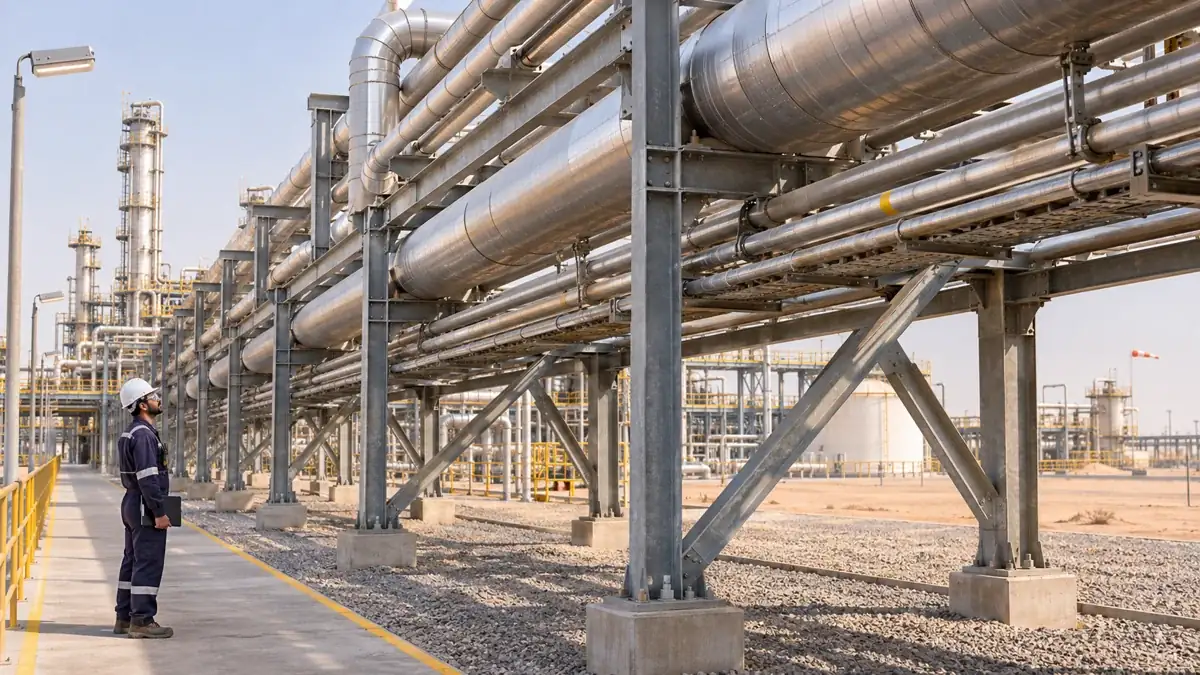
The Gulf hires piping engineers steadily because its oil, gas, petrochemical and power projects run in long cycles of new build, expansion and maintenance, much of it delivered by international EPC contractors. On 4 November 2026, GulfTalent listed 317 piping engineer jobs in Saudi Arabia, with Riyadh, Jeddah and Dhahran the main locations and Saudi Aramco, KBR and Bechtel among the employers (GulfTalent).
Gulf postings repeat the same checks. A September 2026 Wood posting in Sharjah asked for familiarity with ASME, ASTM and API codes and preferred FEED, detailed engineering or EPC exposure (GulfTalent; that role was for UAE nationals). An earlier ADNOC-project posting asked for Smart 3D, Plant 3D or PDMS/E3D, CAESAR II, and 3 to 5 years on ADNOC projects (Qureos, now expired).
- Named software: Smart 3D, E3D/PDMS, Plant 3D, CAESAR II
- Codes: ASME B31.3, plus API and ASTM familiarity
- Project exposure: oil and gas, FEED, detailed engineering, EPC
- Operator experience, such as ADNOC or Aramco projects
- Degree certificate (often attested for visa purposes)
- A portfolio of drawings and models you can share
Keep a Gulf application pack ready: CV, a short PDF portfolio of isometrics, layouts and a stress model (with any confidential project data removed), software and training certificates, and your degree documents.
Career Path and Growth
Not everyone follows the ladder in order. Some move from design into stress early; others move to the client side (operators) or to site roles in construction and commissioning.
How Augmintech's Piping Course Fits This Path
Augmintech's PG Program in Piping Design & Analysis maps onto steps 2 to 5 of the roadmap. It runs 150+ live hours over 6 months, with recordings available for 1000 days.
| Roadmap step | What the course covers |
|---|---|
| 2. Concepts and codes | Piping Design Fundamentals: codes, standards and line classes; components; materials; pipe sizing; routing and thermal flexibility; plot plans and nozzle orientation |
| 3. Software | AutoCAD P&ID, AutoCAD Plant 3D, SP3D and CAESAR II |
| 4. Portfolio projects | Pump circulation system (Plant 3D), compressor unit with pipe rack (SP3D), stress analysis of a steam header (CAESAR II) |
| 5. First job | Job assistance: resume and portfolio review, LinkedIn profile, mock interviews and 500+ interview questions |
E3D is not part of this course. For the full curriculum and career scope, see the course curriculum page.
Start the Piping Roadmap
PG Program in Piping Design & Analysis: 150+ live hours over 6 months, Plant 3D, SP3D, CAESAR II and AutoCAD P&ID, 3 industry projects and 500+ interview questions. ₹65,000 + GST in India, $850 abroad.
Frequently Asked Questions
Sources
- AmbitionBox: Piping Engineer salary and Senior Piping Engineer salary, India, updated March 2025.
- GulfTalent: Piping Engineer salaries in UAE, updated September 2026; Piping engineer jobs in Saudi Arabia, accessed 4 November 2026; Wood, Piping Engineer (Sharjah), posted 23 September 2026.
- Glassdoor, Piping Engineer salary in Saudi Arabia, accessed November 2026.
- Qureos, Piping Engineer (ADNOC projects), expired posting.
- Project Materials, Software for Piping Engineering.
- GlobalSpec, ASME B31.3 scope; Material Welding, ASME B31.1 vs B31.3.
- Augmintech, PG Program in Piping Design & Analysis course page (course facts).
This article was last reviewed on 4 November 2026.
